
The Home of MILA
Life is mostly wanting the things you don't have and then reminiscing about the things that have gone by. We romanticise childhood and the homes we grew up in. So, let me tell you about my home.
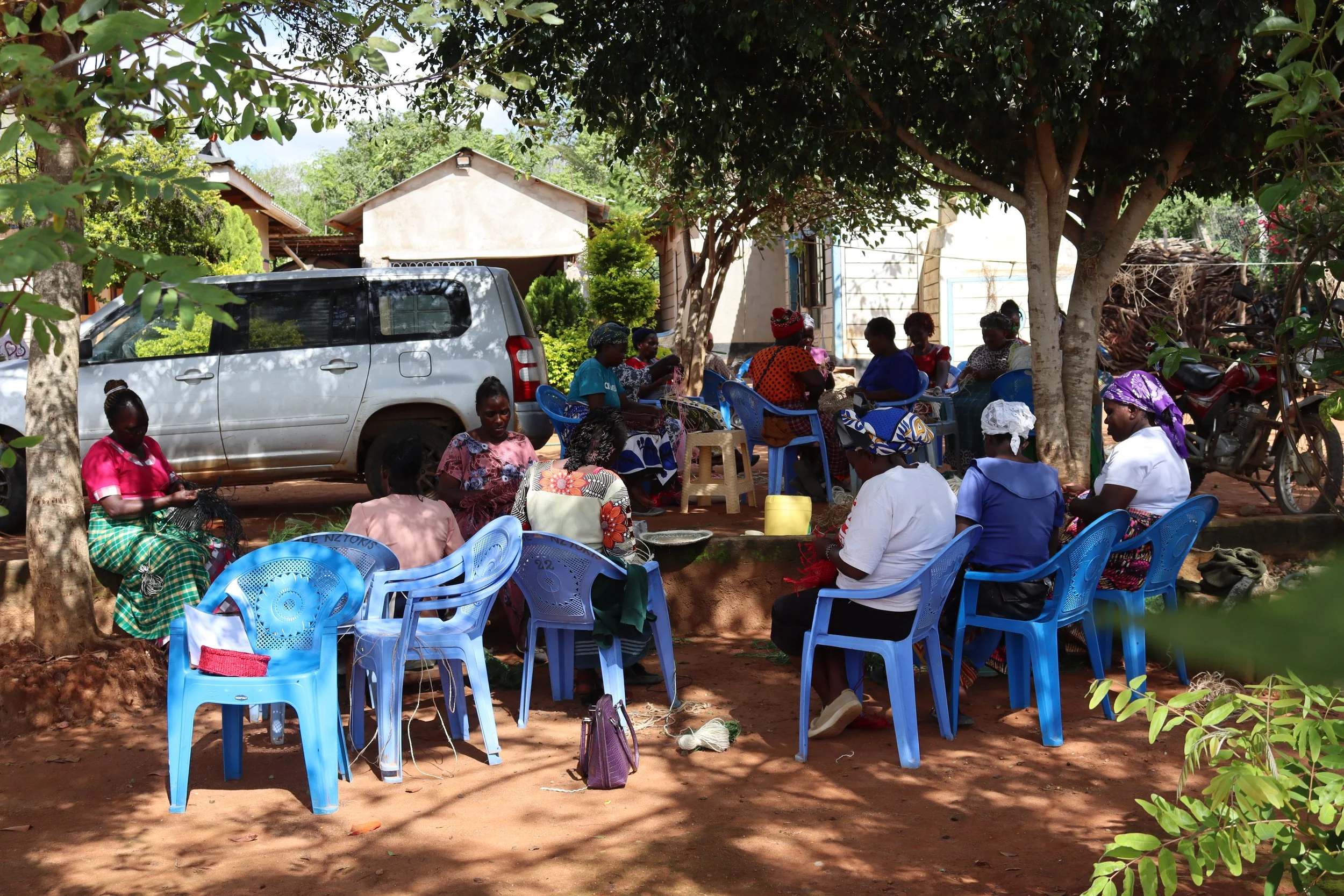
Mine sits in a semi-arid part of Kitui, Kenya, one that is quite hilly; sometimes I have thought pointlessly so. It's in a dusty village, generically named after a tree that you'd never begin to know, because for some reason, back in the day, they just named places after landmarks of prominent trees, as it is with mine and the neighbouring villages.
My home is like most homes in the village: a smoking chimney in the foggy or misty mornings that lead up to sunny and hot days; cracking bare ground in the dry months; faded bougainvillaea flowers scattered on the ground; an ever-so-amused chicken wandering around; and a sleeping lazy dog. -But in other ways, the place I grew up to call home is also peculiar. The quieter moments were significantly fewer in it ever since my mother started a weaving business.
Our compound has always been a hub of activity. The mornings typically begin with bringing out our blue Kenpoly chairs for our artisans to use through the day. Sometimes there is the usual sweeping of dry leaves and unending sisal fibres that find their way into every crevice of the home. There is someone dying fibres in dye-stained pails made from repurposed cooking oil jerry cans, another one hanging the dyed sisal fibres onto firewood, or there is someone detangling the spun yarns of fibres, or there is another one just weaving, or there are vigorous bookkeeping attempts by my mother. (There is also someone sending for a cup of water, because it is almost hot all the time.)
Well, I won't lie that it is all about the weaving; sometimes it's the latest village gossip being shared in hushed tones, and as I will never be grown up enough for it, I sit far away on the sidelines, and as far as the real grown-ups are concerned, I didn't hear a thing.
Like most people, home has become a place I visit occasionally now. I see every time that my mother and the women that raised me are older each time, but the mannerisms are the same; the essence of who they are is the same. Like the weaving, some things about them remain the same.
I probably romanticise the slow living too much. I know weaving is necessary to our livelihoods, in as much as we happened to end up in a place abundant with sisal, or rather, a place where sisal happens to thrive effortlessly. But I wonder if the artisans we work with understand how much it has created a sense of community for them and for us who are of different generations.
Weaving is not a full-time job in my village; it is balanced with keeping up with rainfed agriculture and caregiving and nurturing younger ones. It is the in-between activity that can sometimes slow down during the rainy seasons, but it is always ongoing. The home of my childhood is the home of MILA. This is where your products come to life, surrounded by laughter sometimes and quiet moments of busy weaving at other times.
MILA is for those who choose fewer, better things; pieces made slowly, by hand, with stories woven into every detail. Our products are thoughtfully created using renewable fibres, with care for both people and the environment. Each piece is made at a gentle pace, allowing space for craftsmanship, intention, and well-being.
When we say that we work closely with artisans, we really mean that. The process is not only sustainable but also meaningful, creating everyday staples that are made to be used, loved, and eventually returned to the earth.
